CHAPEA Mission 2: NASA's Yearlong Mars Habitat Test Ends
Mission 2 ended Oct 31, 2026 after 378 days in a 3D-printed habitat at Johnson Space Center; four volunteers practiced Mars ops under isolation and communication delay to inform Artemis and future Mars crews.
Status — completed Oct 31, 2026
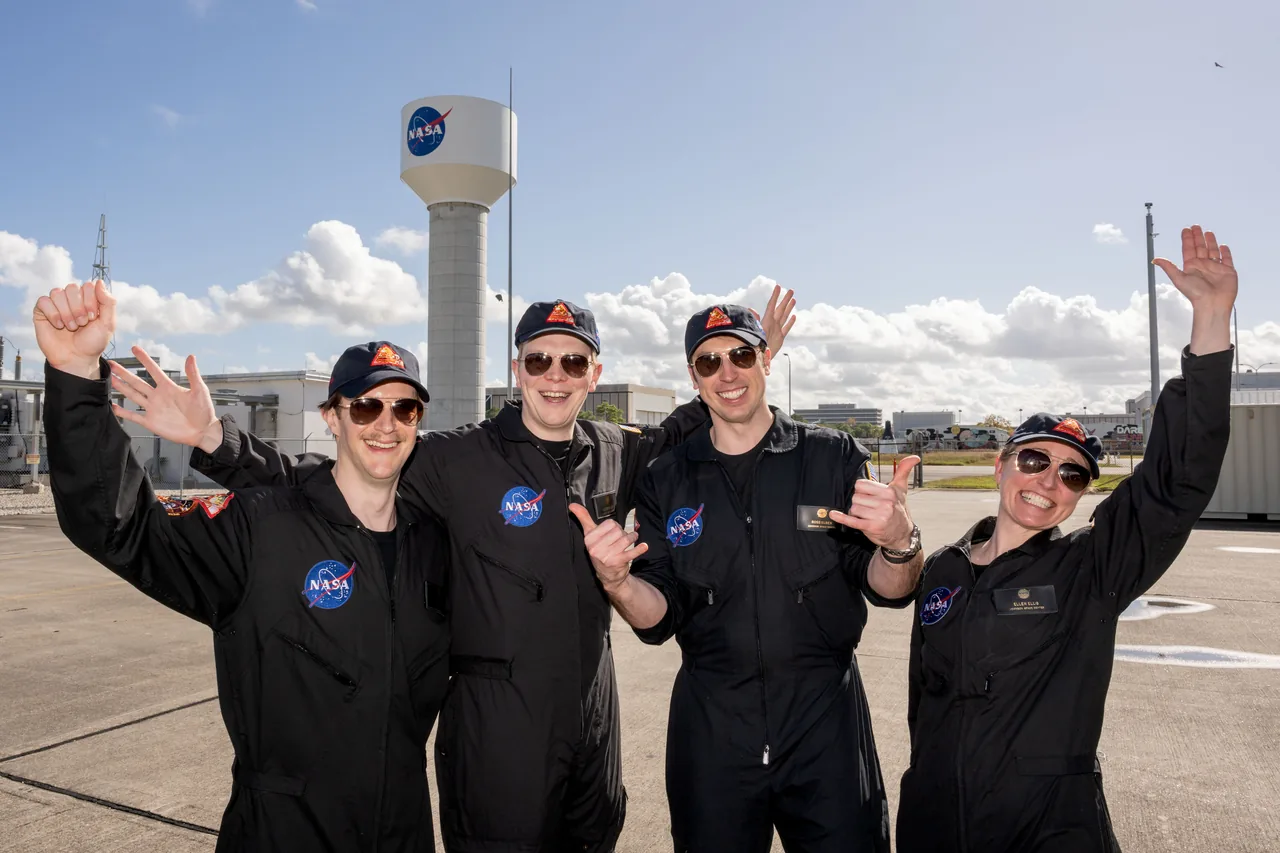
Completed. NASA's second CHAPEA crew exited the Mars Dune Alpha habitat at Johnson Space Center on Saturday, Oct 31, 2026 after 378 days of isolation. Ingress was Oct 19, 2025. Live coverage of the exit ceremony began at 3 p.m. EDT (NASA media invite, Oct 27, 2026; NASA image article, Nov 2, 2026).
Last checked Nov 5, 2026. T-ZERO tracks the dates and public facts; we do not invent science results.
What is CHAPEA?
CHAPEA — Crew Health and Performance Exploration Analog — is a NASA series of analog missions that simulate yearlong stays on the surface of Mars. Four volunteer crew members live in an isolated, roughly 1,700-square-foot 3D-printed habitat at Johnson Space Center in Houston and run Mars-like operations under stressors such as delayed communications, resource limits, and isolation (About CHAPEA; CHAPEA home).
Mission 2 timeline
| Milestone | Date | Note |
|---|---|---|
| Crew announced | Sept 5, 2025 | Four research volunteers named |
| Ingress (enter habitat) | Oct 19, 2025 | Start of the 378-day mission |
| 200 days / LOS blackout | Around May 7, 2026 | Simulated two-week loss of signal |
| One-year mark | Oct 19, 2026 | Still inside; exit planned Oct 31 |
| Egress (exit habitat) | Oct 31, 2026 | 378 days complete |
Duration wording follows NASA: 378 days.
The Mission 2 crew
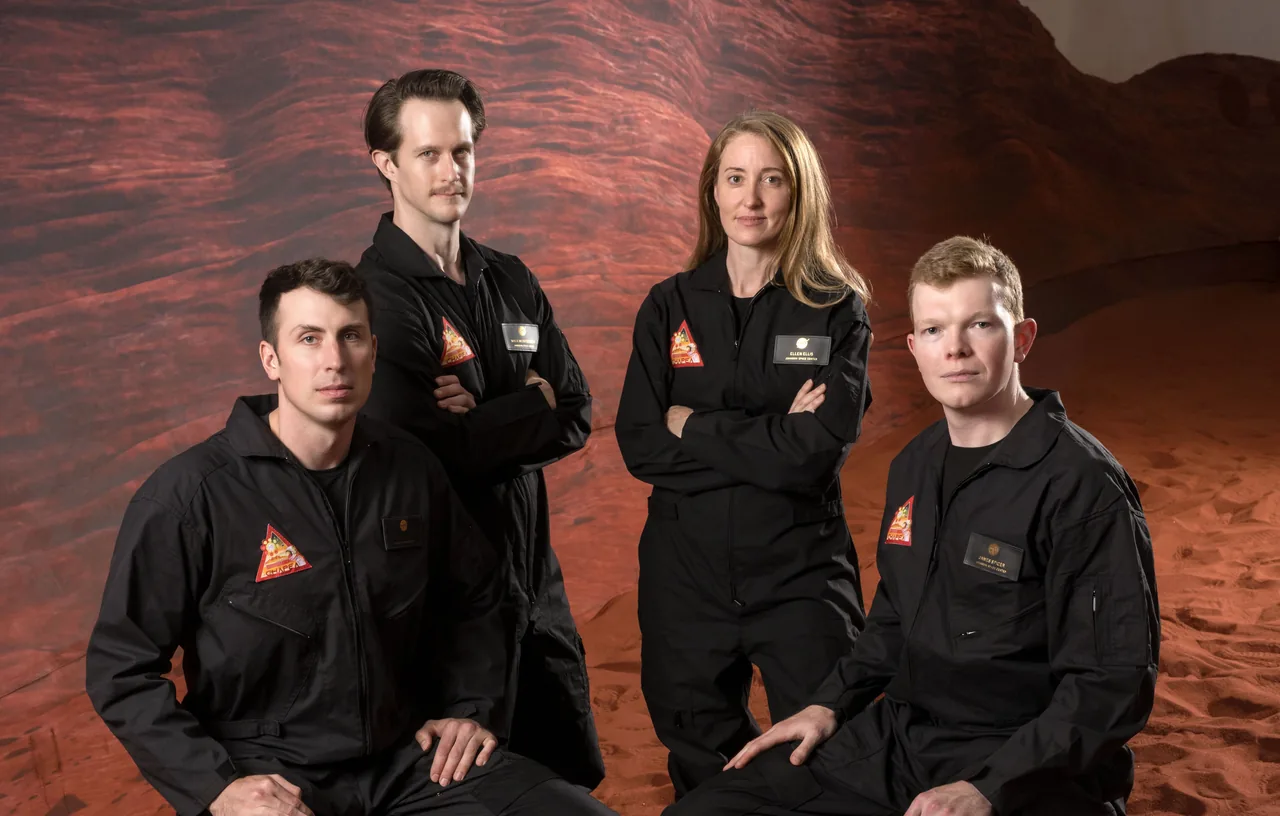
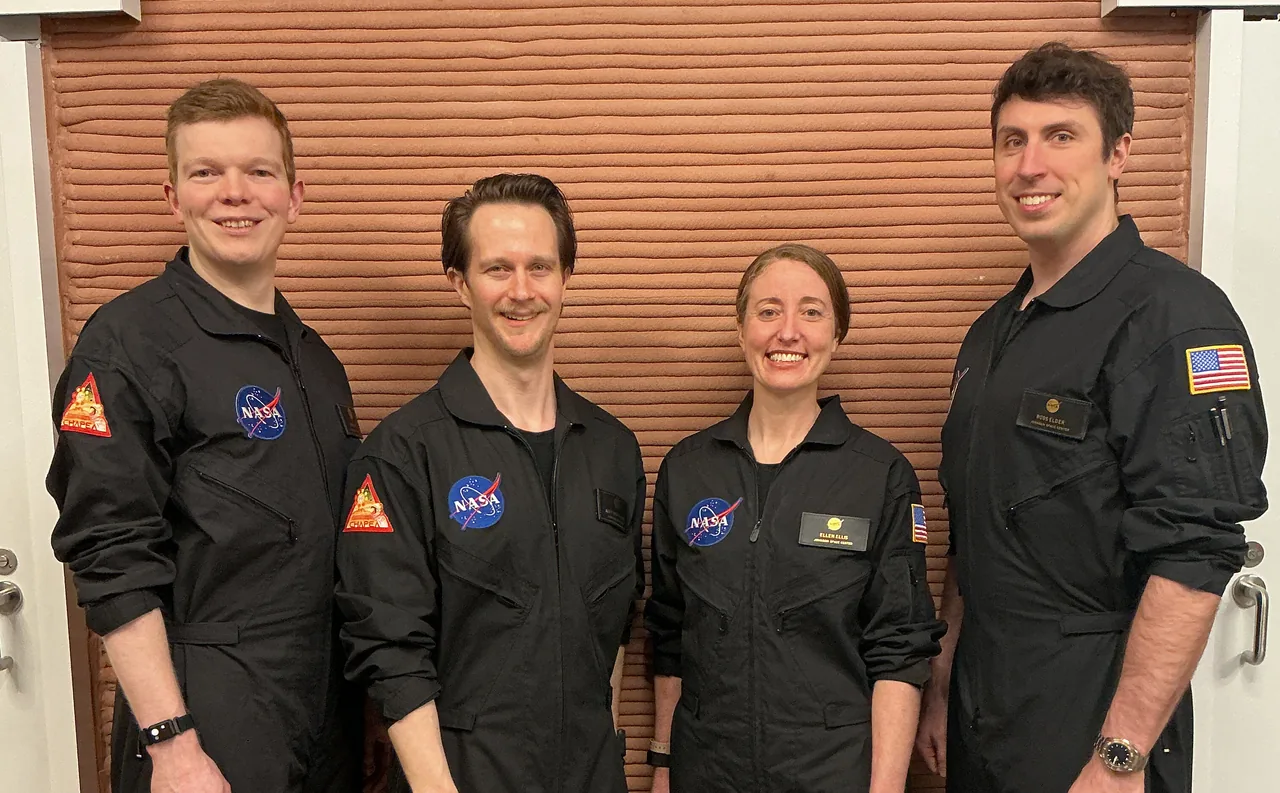
- Ross Elder — mission commander
- Ellen Ellis — medical officer
- Matthew Montgomery — science officer
- James Spicer — flight engineer
Call them research volunteers or analog crew members — not astronauts. Roles are from NASA's one-year mark article.
Life inside the habitat
The habitat includes private crew quarters, a kitchen, medical and recreation areas, fitness space, crop growth, a technical work area, bathrooms, an airlock, and a sandbox for simulated Marswalks. Mission 2 activities included high-tempo simulated EVAs, robotic operations, habitat maintenance, exercise, and crop cultivation (CHAPEA Mission 2; 200-day update).
Communication delays and blackouts
Outside blackout periods, the crew worked with Mars-like communication delays. NASA's Mission 2 page cites 22-minute delays among the stressors; Houston We Have a Podcast audio logs for CHAPEA 2 describe one-way light-time on the order of about 3 to 23 minutes, which makes live conversation impractical.
Separately, NASA ran a simulated two-week loss-of-signal period around the 200-day mark (May 2026) to mimic solar conjunction, when Mars passes behind the Sun and Earth contact is blocked. During that window the crew operated without mission-control contact, using preplanned procedures (NASA 200-day article).
A one-year article also notes that, with Mars-like delay, family contact was limited to email. Another NASA scientist quoted delays “lasting up to 45 minutes each way” in the context of future care systems; we treat that as an upper-bound planning figure, not Mission 2's day-to-day setting.
Why NASA runs this
Data from CHAPEA help NASA prepare for lunar missions and Mars by informing food-system design, crew time, Deep Space Network bandwidth, medical care, and behavioral support. NASA frames the work as input to Artemis, Moon Base planning, and future Mars crews — not as a published set of Mission 2 “results” yet (media invite; one-year mark).
Mission 1 vs Mission 2 vs what comes next
| Mission | Dates | Status |
|---|---|---|
| CHAPEA Mission 1 | June 25, 2023 – July 6, 2024 | Completed |
| CHAPEA Mission 2 | Oct 19, 2025 – Oct 31, 2026 (378 days) | Completed |
| Moon and Mars Exploration Analog | No earlier than August 2027 | Recruiting (combined HERA + CHAPEA elements) |
NASA has not announced a named “CHAPEA Mission 3.” The next public recruiting call is for a yearlong Moon and Mars Exploration Analog at Johnson beginning no earlier than August 2027, combining transit (HERA habitat) and surface (CHAPEA habitat) phases (NASA HRP recruiting).
CHAPEA Mission 2 FAQ
When did NASA's CHAPEA Mission 2 end?
The four-person crew exited the 3D-printed Mars habitat at Johnson Space Center on Oct 31, 2026 after 378 days. They had entered on Oct 19, 2025.
How long were the volunteers inside, and when did they enter?
They lived inside for 378 days, from Oct 19, 2025 to Oct 31, 2026 (NASA).
Who was on the CHAPEA Mission 2 crew?
Commander Ross Elder, medical officer Ellen Ellis, science officer Matthew Montgomery, and flight engineer James Spicer. They are research volunteers in an analog mission, not astronauts.
What is CHAPEA, and where is the habitat?
CHAPEA (Crew Health and Performance Exploration Analog, pronounced cha-pea'-ah) is a NASA series of yearlong Mars-surface simulations. The habitat is a roughly 1,700-square-foot 3D-printed facility at NASA's Johnson Space Center in Houston.
What did the crew do during the year?
Simulated Marswalks (suited EVAs), habitat maintenance, exercise, crop growth, robotic operations, and other Mars-mission tasks while dealing with isolation, resource limits, and delayed communications (NASA).
How long were the communication delays and blackouts?
NASA describes Mars-like one-way delays on the order of about 3 to 23 minutes (Mission 2 page cites a 22-minute delay; podcast audio logs cite about 3–23 minutes). A separate simulated two-week loss-of-signal period mimicked solar conjunction, when Mars is behind the Sun and contact with Earth is blocked (NASA, May 2026). Outside that blackout, contact with families was limited to delayed email.
How does this relate to Artemis / Moon Base / future Mars crews?
Health and performance data from CHAPEA help NASA plan food systems, crew time, Deep Space Network bandwidth, medical care, and behavioral support for Artemis, a sustained lunar presence, and eventual Mars missions. NASA has not published Mission 2 science results yet; say the data will inform planning.
Was this the first CHAPEA mission, and what comes next?
No. Mission 1 ran June 25, 2023 to July 6, 2024. NASA has not announced a named CHAPEA Mission 3. It is recruiting for a yearlong Moon and Mars Exploration Analog beginning no earlier than August 2027 that combines elements of HERA and CHAPEA into one campaign (NASA HRP).
What happens next for the Mission 2 crew?
After exit, NASA planned about two weeks of post-mission evaluations and debriefs with scientists (NASA one-year mark article).
Sources: NASA media invite, NASA exit image, NASA one-year mark, NASA 200-day mark, CHAPEA Mission 2, About CHAPEA, next analog recruiting. Last checked Nov 5, 2026.
Related on T-ZERO
T-ZERO is an unofficial fan project. Images: NASA. T-ZERO is not affiliated with or endorsed by NASA.