NASA's Mars Rovers: Sojourner to Perseverance
NASA has landed five rovers on Mars: Sojourner (1997), Spirit and Opportunity (2004), Curiosity (2012) and Perseverance (2021). All five launched from Cape Canaveral on Delta II or Atlas V rockets. As of November 2026, Curiosity and Perseverance are still working; the other three have ended.
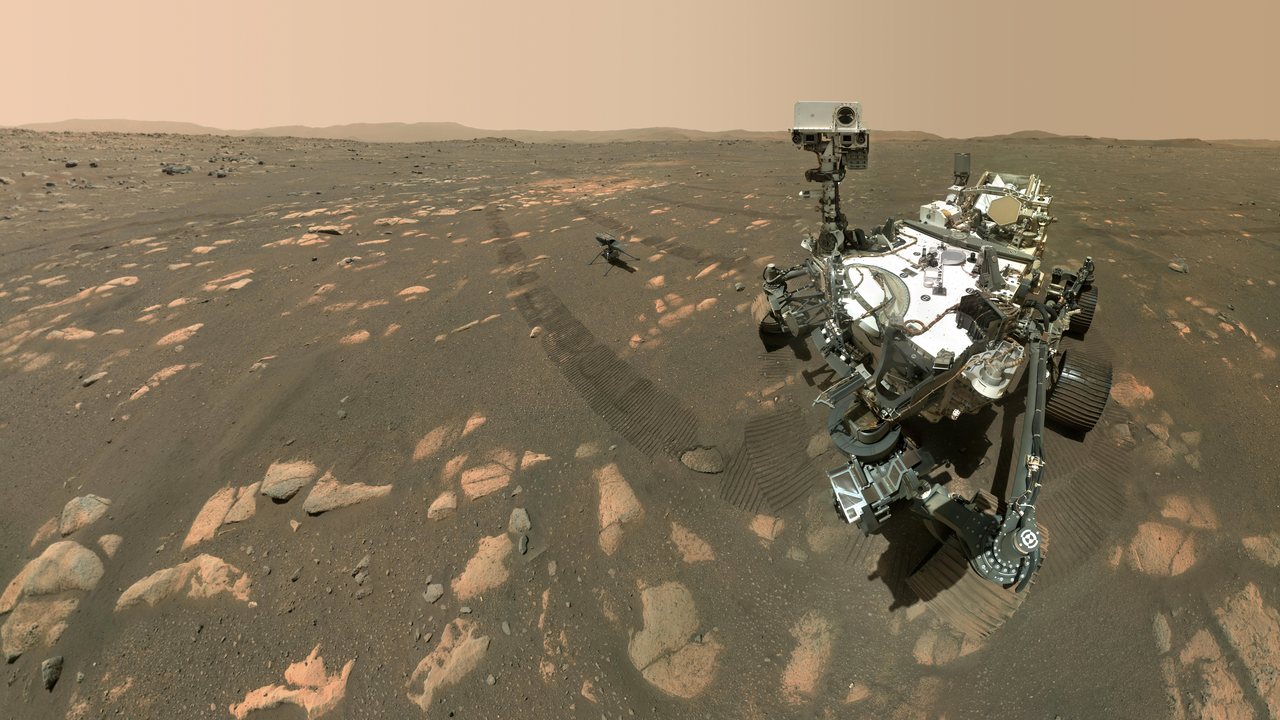
Every NASA rover started its trip the same way T-ZERO's launches do: on a rocket from Florida's Space Coast, timed to a launch window that opens only about every 26 months. This hub covers each rover, the rocket that launched it, and how it ended up (or is still going).
Every NASA Mars rover at a glance
| Rover | Launch | Rocket | Landed | Status (Nov 2026) | Distance driven |
|---|---|---|---|---|---|
| Sojourner | December 4, 1996 | Delta II 7925 | July 4, 1997, Ares Vallis | Ended 1997 (83 sols) | about 100 m |
| Spirit | June 10, 2003 | Delta II 7925 | January 4, 2004, Gusev Crater | Ended 2011 (last contact March 22, 2010) | 7.73 km (4.8 mi) |
| Opportunity | July 7, 2003 | Delta II 7925H (Heavy) | January 25, 2004, Meridiani Planum | Ended February 13, 2019 (last contact June 10, 2018) | 45.16 km (28.06 mi) |
| Curiosity | November 26, 2011 | Atlas V 541 | August 6, 2012, Gale Crater | Active | more than 30 km (19 mi) |
| Perseverance | July 30, 2020 | Atlas V 541 | February 18, 2021, Jezero Crater | Active | more than 45 km (28 mi) |
Landing dates are UTC. China's Zhurong rover also reached Mars in 2021 and has been in hibernation since May 2022.
Sojourner (1997)
The first rover on another planet was the size of a microwave oven. It rode to Mars aboard the Mars Pathfinder lander, launched on a Delta II from Cape Canaveral, and bounced down on airbags on July 4, 1997. Sojourner drove about 100 meters around the lander and studied rocks for 83 sols, far past its seven-sol design life, until the lander fell silent in September 1997.
Spirit (2004–2010)

Spirit landed in Gusev Crater on January 4, 2004, for a planned 90-sol mission. It climbed Husband Hill, the tallest of the Columbia Hills (seen above from orbit by Mars Global Surveyor in 2005), and found signs of ancient hot springs. In 2009 it got stuck in soft soil; its last contact was March 22, 2010, and NASA ended the mission in May 2011.
Opportunity (2004–2018)
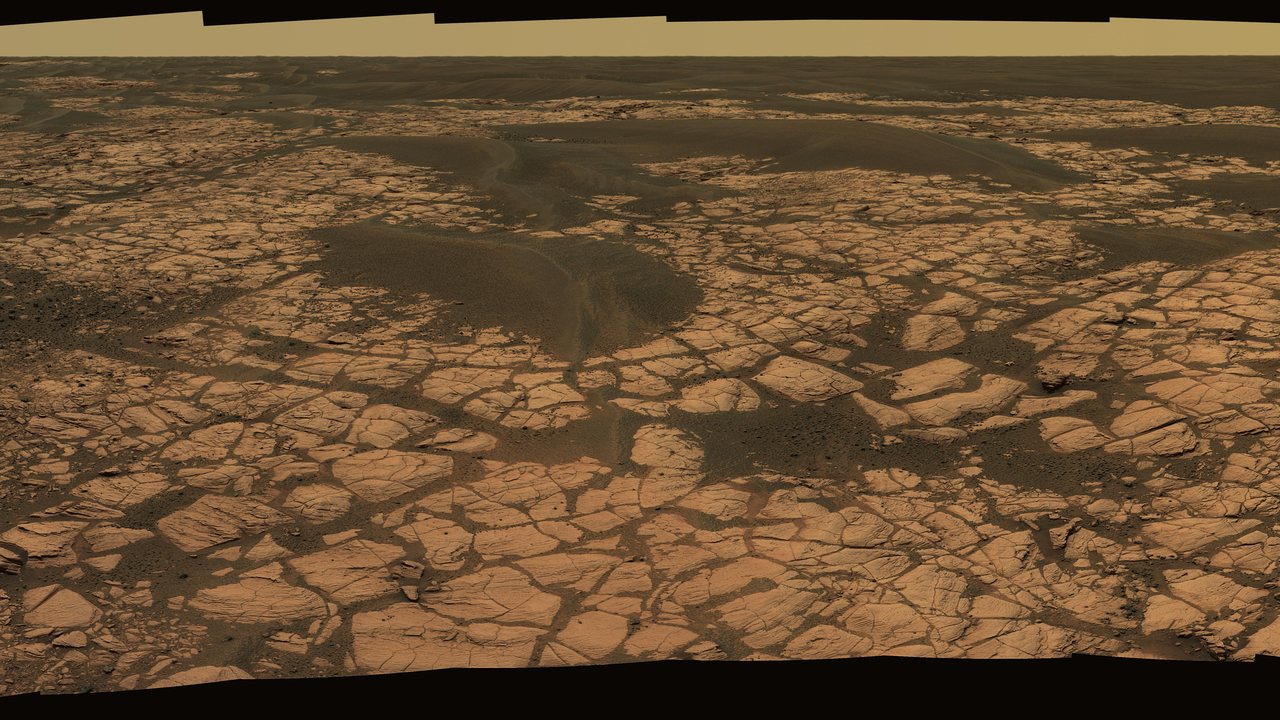
Opportunity landed at Meridiani Planum three weeks after Spirit, also on airbags. Designed for 90 sols, it worked for almost 15 years and found strong evidence that liquid water once soaked the ground. A planet-wide dust storm in 2018 covered its solar panels; it was last heard from on June 10, 2018, and NASA declared the mission over on February 13, 2019, after 45.16 km of driving.
Curiosity (2012–today)
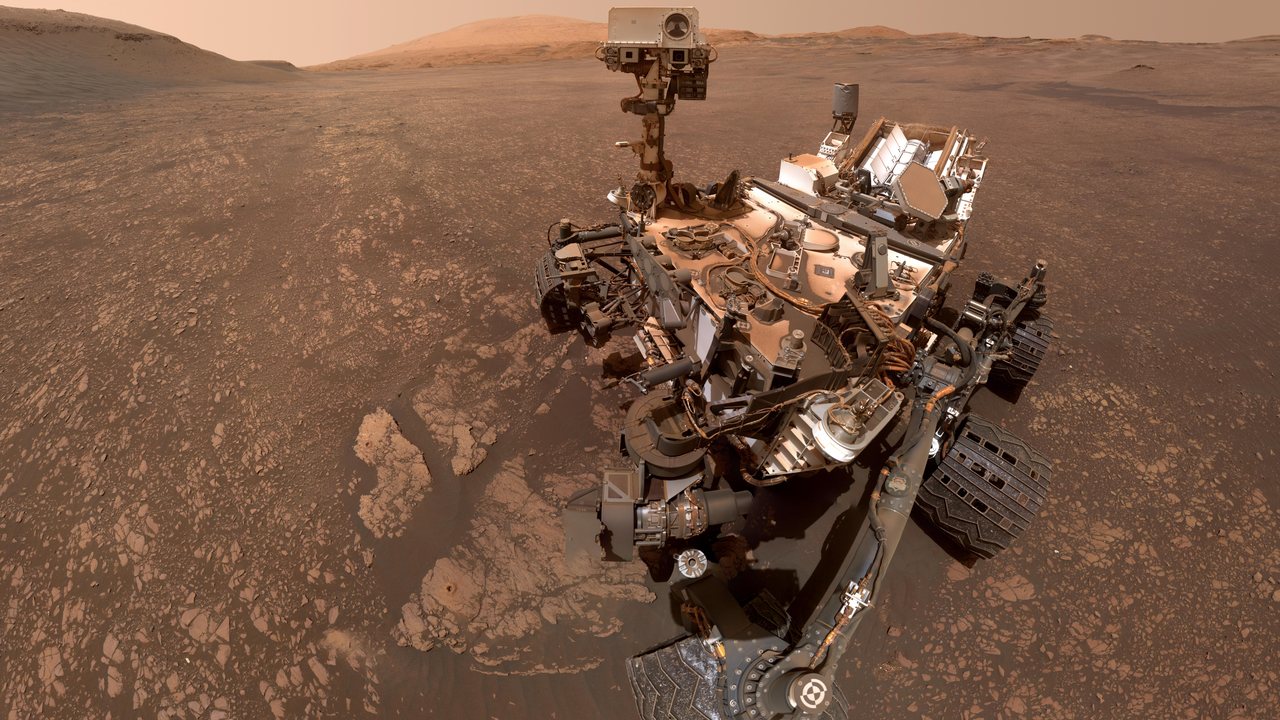
Curiosity was the first rover too heavy for airbags. After launching on an Atlas V 541 on November 26, 2011, it was lowered to the floor of Gale Crater by a rocket-powered 'sky crane' on August 6, 2012. Powered by a nuclear generator, it showed that Gale Crater once held a lake that could have supported microbes, and it has spent years climbing Mount Sharp. As of late 2026 it is still drilling and driving.
Perseverance and Ingenuity (2021–today)
Perseverance launched on an Atlas V 541 on July 30, 2020, and landed in Jezero Crater, an ancient river delta, by sky crane on February 18, 2021. It is collecting rock cores in sealed tubes; ten were left in a depot at Three Forks and the rest ride aboard the rover. In October 2026 it passed Opportunity's off-world driving record.
It carried Ingenuity, a 1.8 kg helicopter that made the first powered, controlled flight on another planet on April 19, 2021. Ingenuity flew 72 times before a rotor blade was damaged in January 2024, ending its mission.
How rovers get to Mars
Earth and Mars line up for an efficient transfer only about once every 26 months, so Mars launches cluster in short windows. The trip takes about seven months. Every NASA rover launched from Cape Canaveral: Sojourner, Spirit and Opportunity on Delta II rockets, and Curiosity and Perseverance on the Atlas V 541, a version with four solid boosters and a five-meter fairing. Both of those rockets are now retired or retiring; ULA's Vulcan is the Atlas V's successor.
What's next
The NASA-ESA Mars Sample Return campaign, meant to bring Perseverance's tubes to Earth, was cancelled when Congress did not fund it in the spending law signed January 23, 2026. NASA has said it is studying simpler options; no retrieval mission is scheduled. Europe's Rosalind Franklin rover is targeted to launch in late 2028 on a NASA-provided rocket. Dates like these often slip, so check back.
FAQ
How many rovers are on Mars right now?
Six rovers have reached Mars: NASA's Sojourner, Spirit, Opportunity, Curiosity and Perseverance, and China's Zhurong. As of November 2026 only two are working: Curiosity and Perseverance.
Is Curiosity still working? Is Perseverance?
Yes, both. As of late 2026 Curiosity is climbing Mount Sharp in Gale Crater and Perseverance is exploring west of Jezero Crater.
What rocket launched Perseverance?
A United Launch Alliance Atlas V 541 from Space Launch Complex 41 at Cape Canaveral, on July 30, 2020.
Why did Opportunity stop working?
A global dust storm in mid-2018 blocked sunlight from its solar panels. It was last heard from on June 10, 2018, and NASA ended the mission on February 13, 2019 after more than 1,000 recovery attempts.
How long does it take to get to Mars?
About seven months on a typical launch-window trajectory. Perseverance took just under seven months, from July 30, 2020 to February 18, 2021.
When is the next Mars launch window?
Mars launch windows come about every 26 months. One spans late 2026, and the next is expected in early 2029. NASA has no rover scheduled for either.
Keep exploring
Sources
- NASA: Mars Exploration
- NASA: Perseverance rover
- NASA: Curiosity rover
- NASA: Mars Exploration Rovers (Spirit and Opportunity)
- NASA: Ingenuity Mars Helicopter
- Grokipedia: Mars rover
Images: NASA/JPL-Caltech/MSSS and NASA/JPL-Caltech/Cornell, used under NASA's media usage guidelines. T-ZERO is not affiliated with or endorsed by NASA. Our videos: @t0rockets.